Automate the routine. Keep humans on the judgment calls. Log every run.
# what the workflow should do
Watch Gmail for invoice emails.
For each thread, extract the invoice against the schema,
then append the row to Google Sheets.
✓ ingest12 invoice emails from Gmail
✓ classify vendor, currency, doc type
✓ extract line items against the schema
✓ validate totals and required fields
→ review 2 exceptions to the queue
✓ sync 10 rows to Google Sheets
# what the workflow should do
Watch PagerDuty for triggered incidents. Classify each one from
the alert payload, open a Jira ticket, and post a summary to the
on-call Slack channel.
✓ ingest 14 triggered incidents from PagerDuty
✓ classify severity, service, owner
✓ extract fields from the alert payload
✓ validate duplicates and routing rules
→ review 1 exception to the queue
✓ sync13 Jira tickets, summary to Slack
# what the workflow should do
Every night, pull the day's Stripe payouts.
Match each payout against QuickBooks invoices and post the
reconciliation summary to the finance Slack channel.
✓ ingest 38 payouts from Stripe
✓ classify payout type and account
✓ extract amounts and references
✓ validate match against QuickBooks
→ review 3 mismatches to the queue
✓ sync summary to finance in Slack
Discover. Compile. Run. Repeat.
Full Page Scroll with Image Switching
Ground the spec in reality, not memory
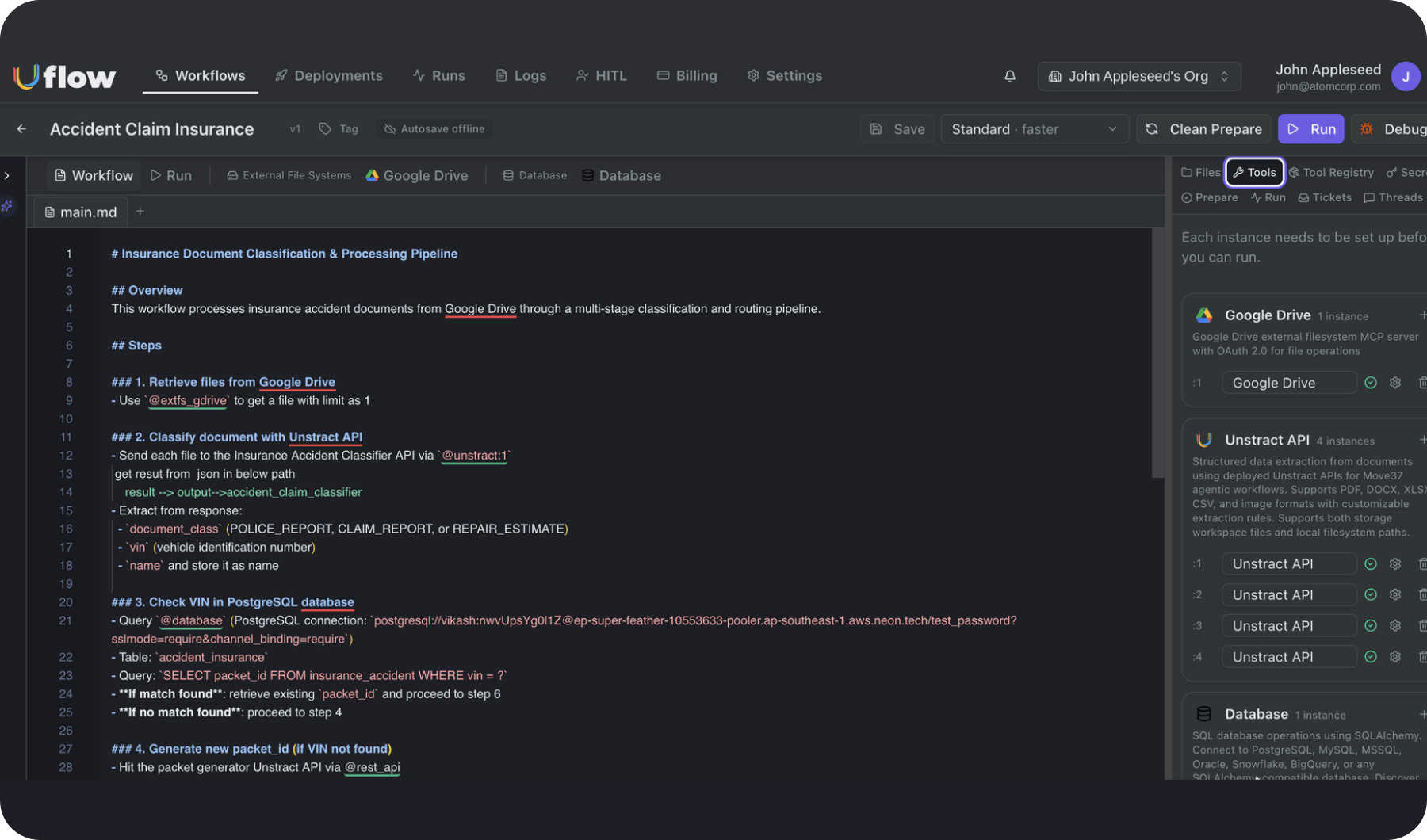
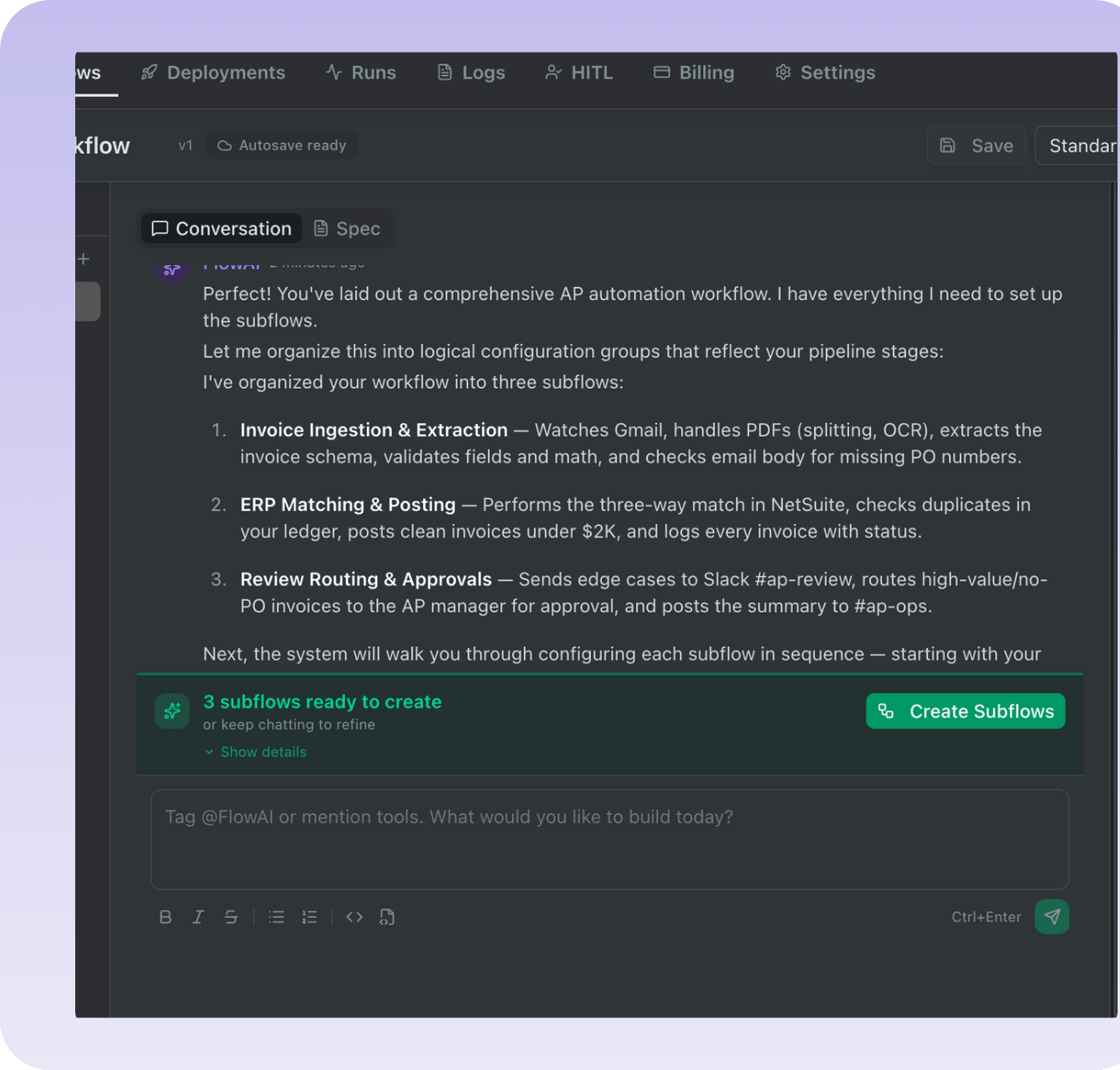
Exceptions and judgment calls live in people's heads and muscle memory, never in the SOP. A mining agent watches the real process run, in a browser, over SSH, or on a mainframe screen, walks it with the person who runs it, and writes what it saw into a spec anyone can read.
The spec compiles down to a frozen plan
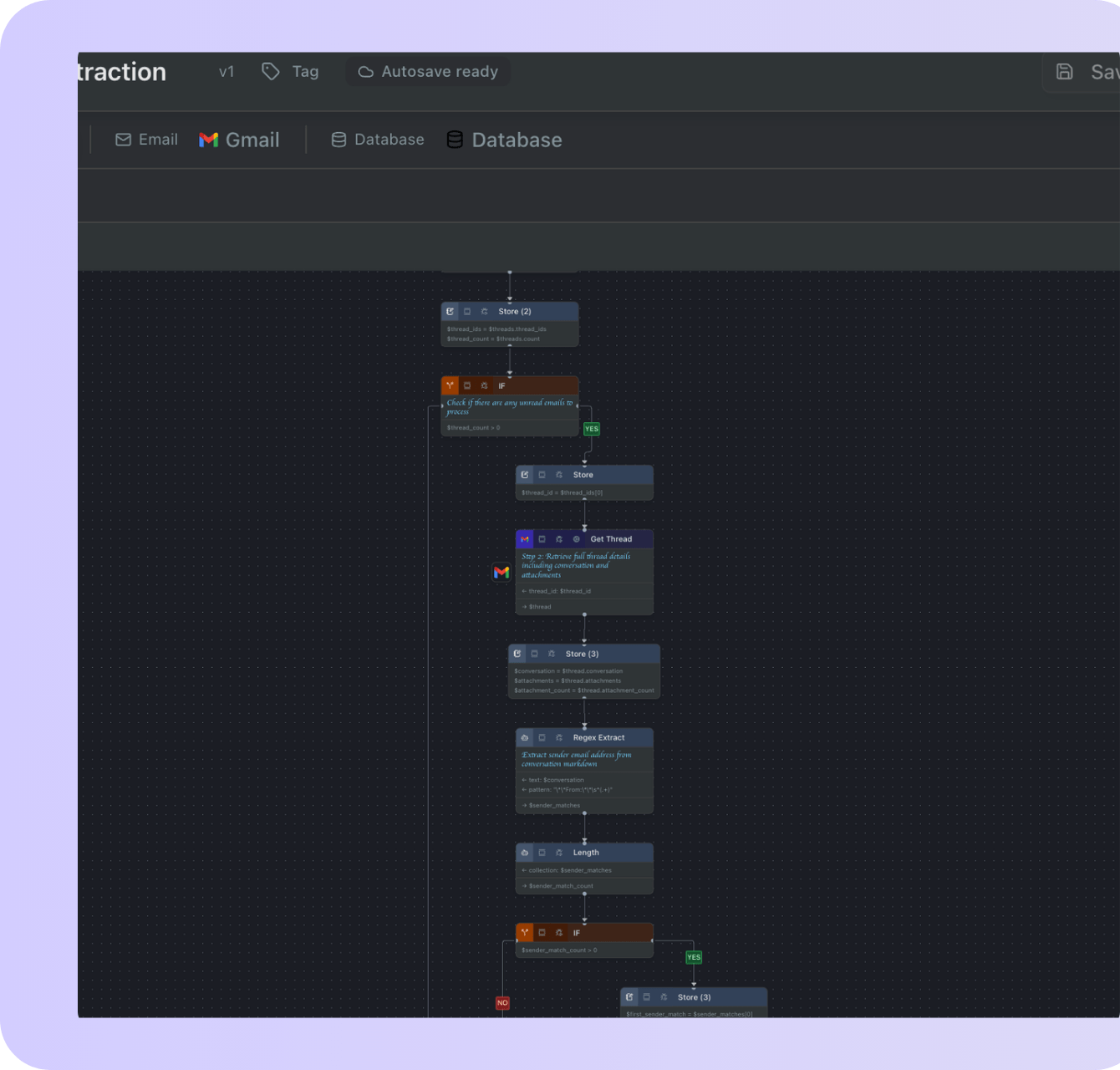
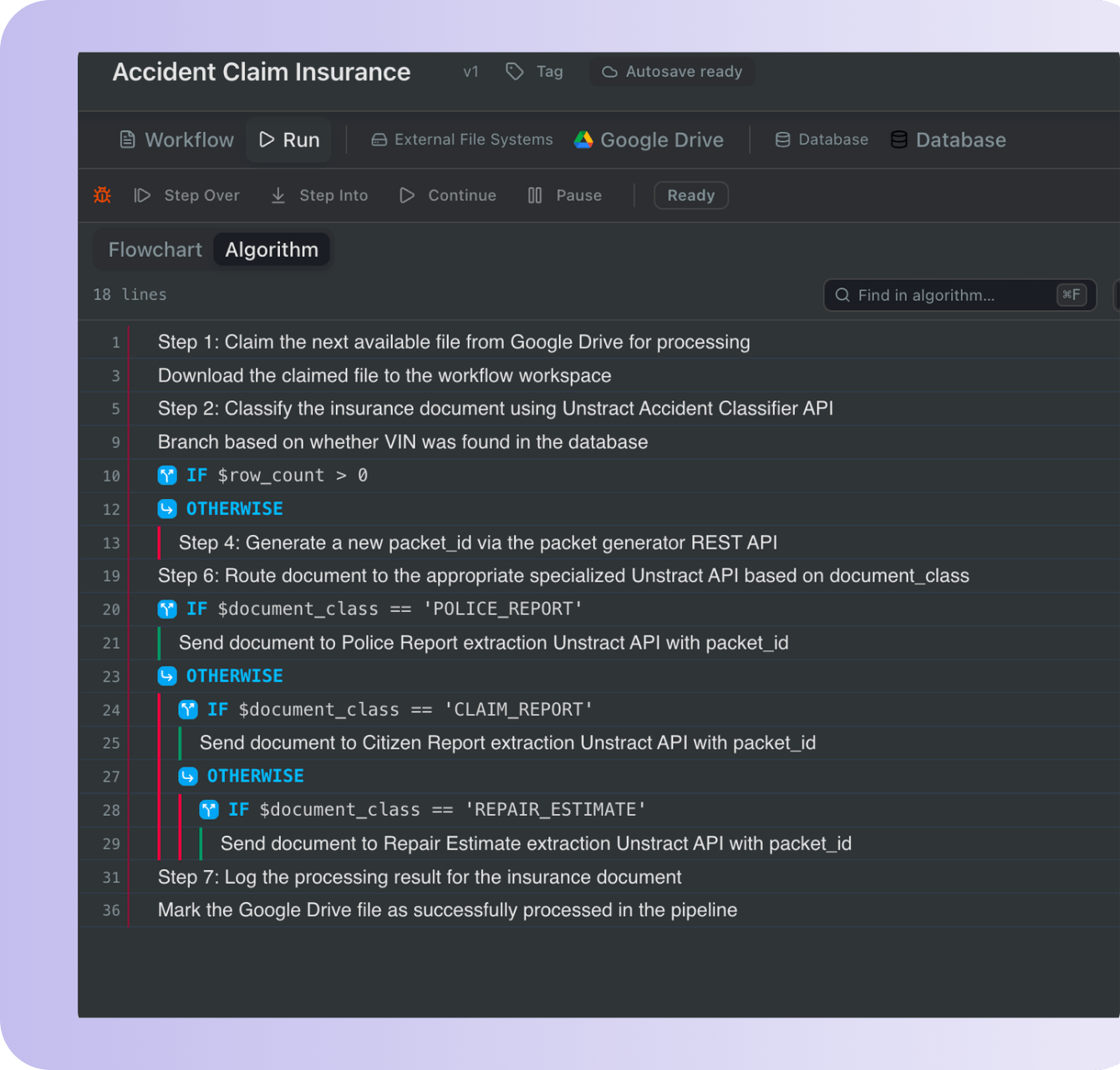
The description goes in once. What comes out is validated, versioned, and identical on every run. A model helps author the plan. The runs never ask it anything. A spec change ships like a code change: diffed, reviewed, versioned, with one-step rollback.
Every workflow run is run #1
Same inputs, same outputs. No runtime model, no prompt drift. Exceptions land in front of a reviewer, not in a log file, and every read and write lands on the record, ready to replay for audit or debugging.
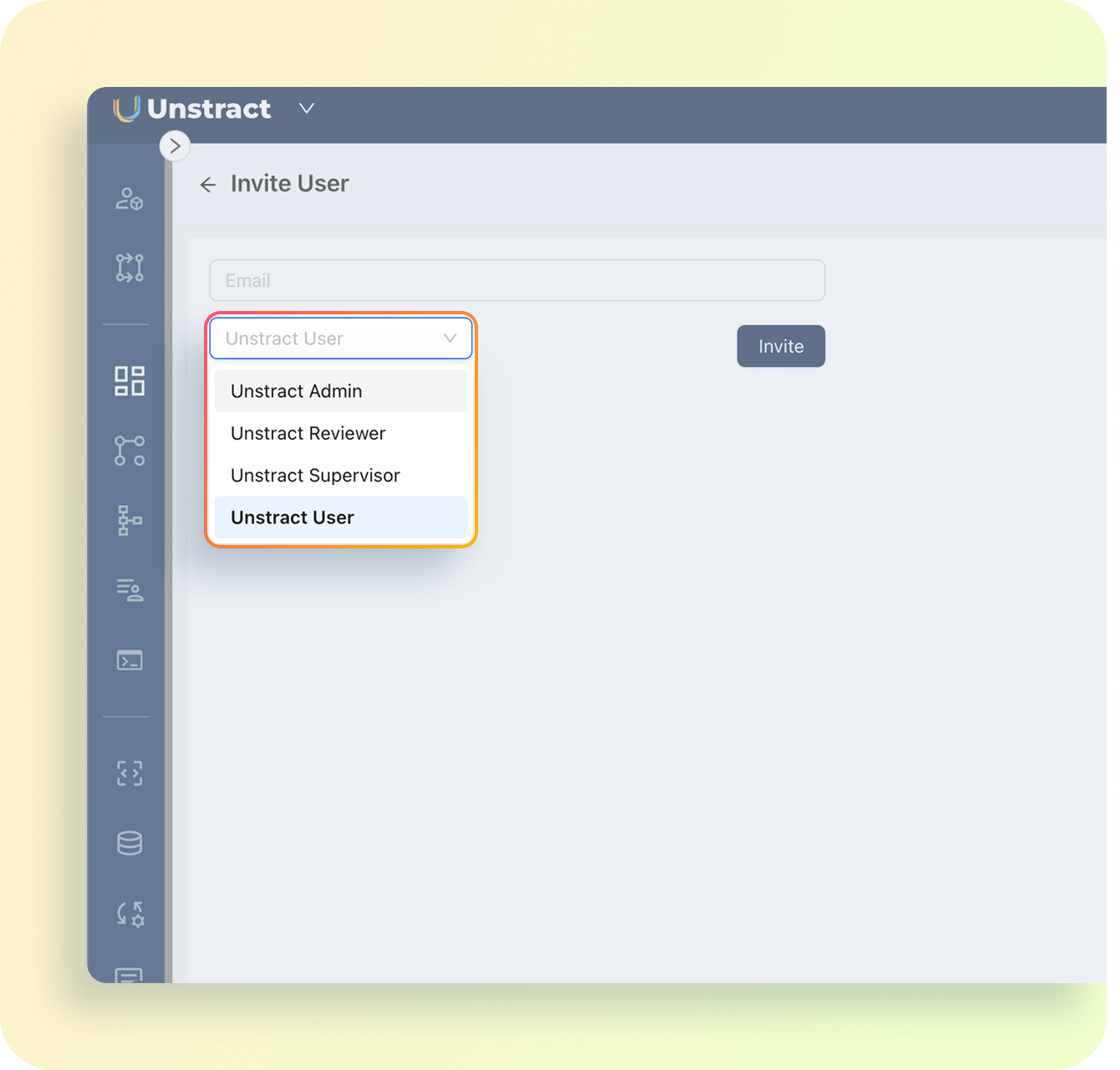
Control who reviews what and ensure sensitive data only reaches authorized eyes. Create custom approval hierarchies or assign domain experts to review specific documents. Your compliance team will thank you.
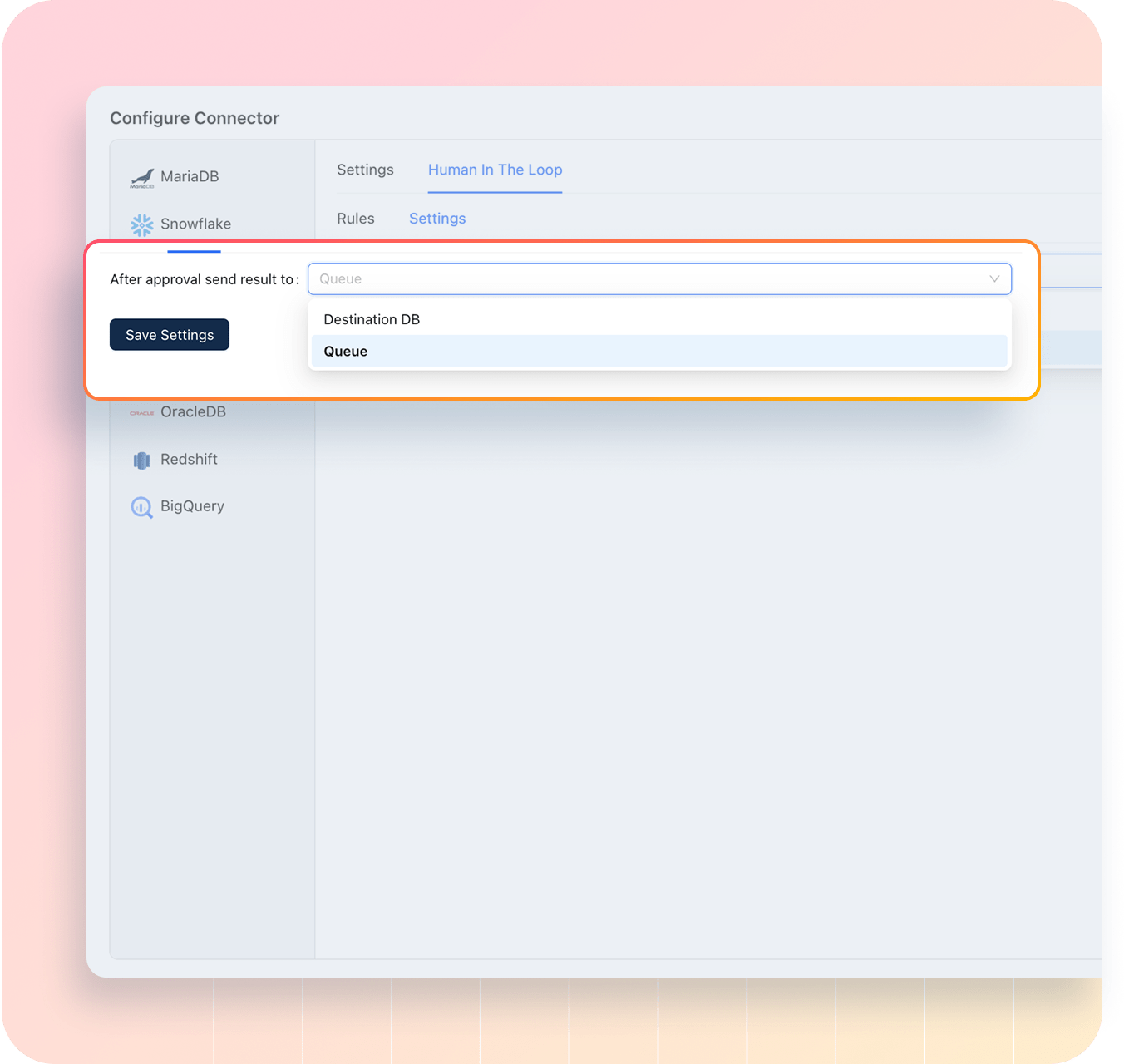
Send a fixed percentage of documents for review every time your workflow runs. Build conditions based on field values or confidence scores. Ensure your team only reviews edge cases while perfect extractions flow through.
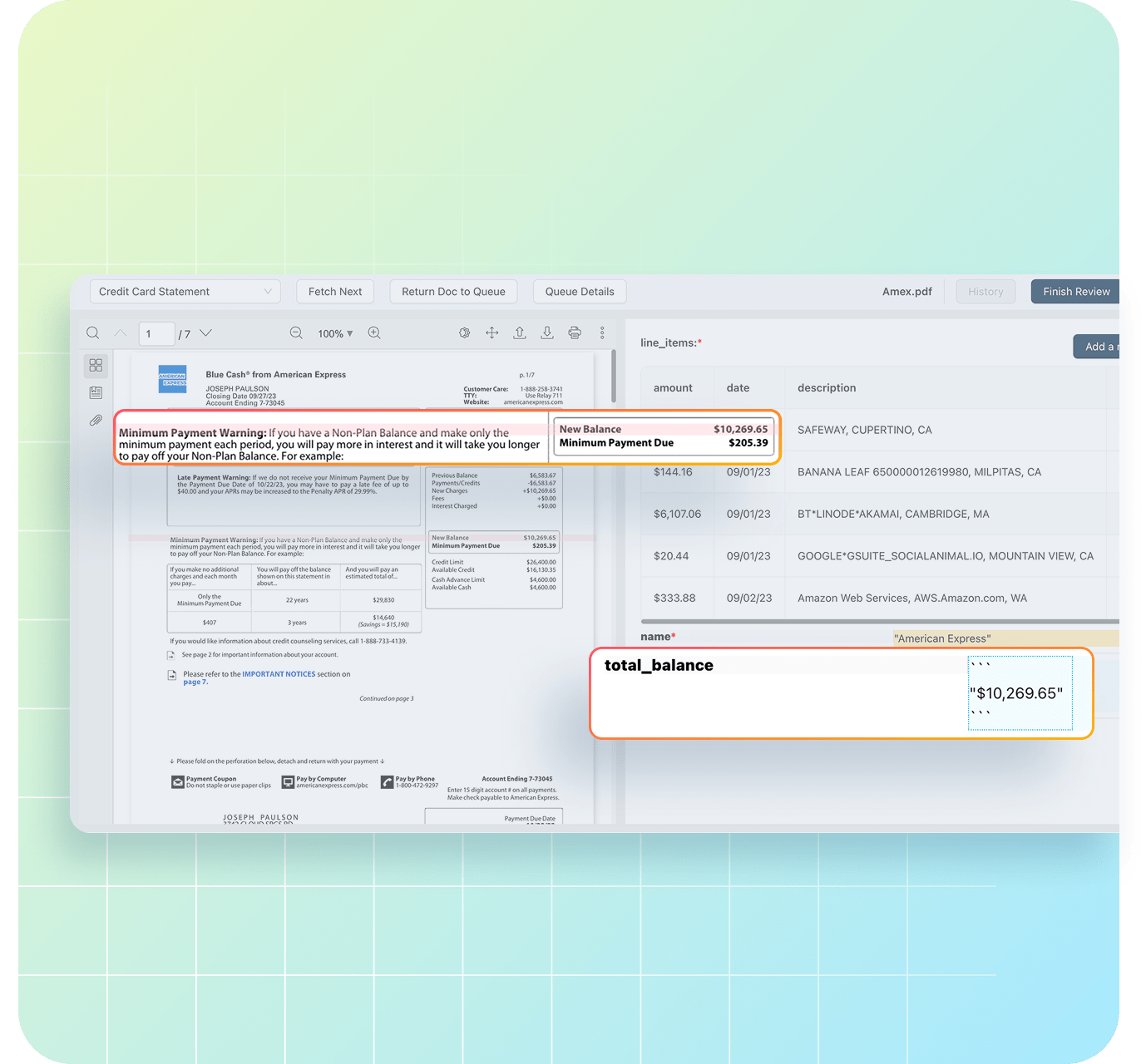
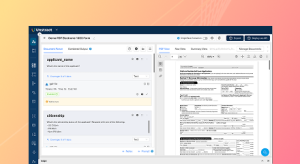
See extracted data side-by-side with source documents. Click to highlight, edit mistakes, and approve with confidence. What used to take hours of context-switching now happens in seconds.
Push data into production databases or queue for on- demand API retrieval. Need more flexibility? Export final results to JSON or CSV. However your system needs it—you get clean, structured data that’s ready to use.
Unstract connects to major storage systems and databases to seamlessly support your data validation workflows.
What changes when the runs stop changing
Less manual review
Automations clear the routine work and route only true exceptions to people. Teams spend the day on judgment, not data entry.
Minutes, not sprints
A rule change is an edit to the spec, not an engineering ticket. Logic changes go live without waiting on a release cycle.
Audit-ready by default
Every run lands on the record and replays on demand. Compliance sign-off reads the record instead of chasing screenshots.
Loved by
users
Lenny Hartman
CTO, Tokenstreet
Unstract lets us turn a wide range of document formats into clean, structured data with low integration effort and without compromising on enterprise-grade controls. Its high extraction accuracy paired with clear highlight-based validation speeds up our process a lot!